
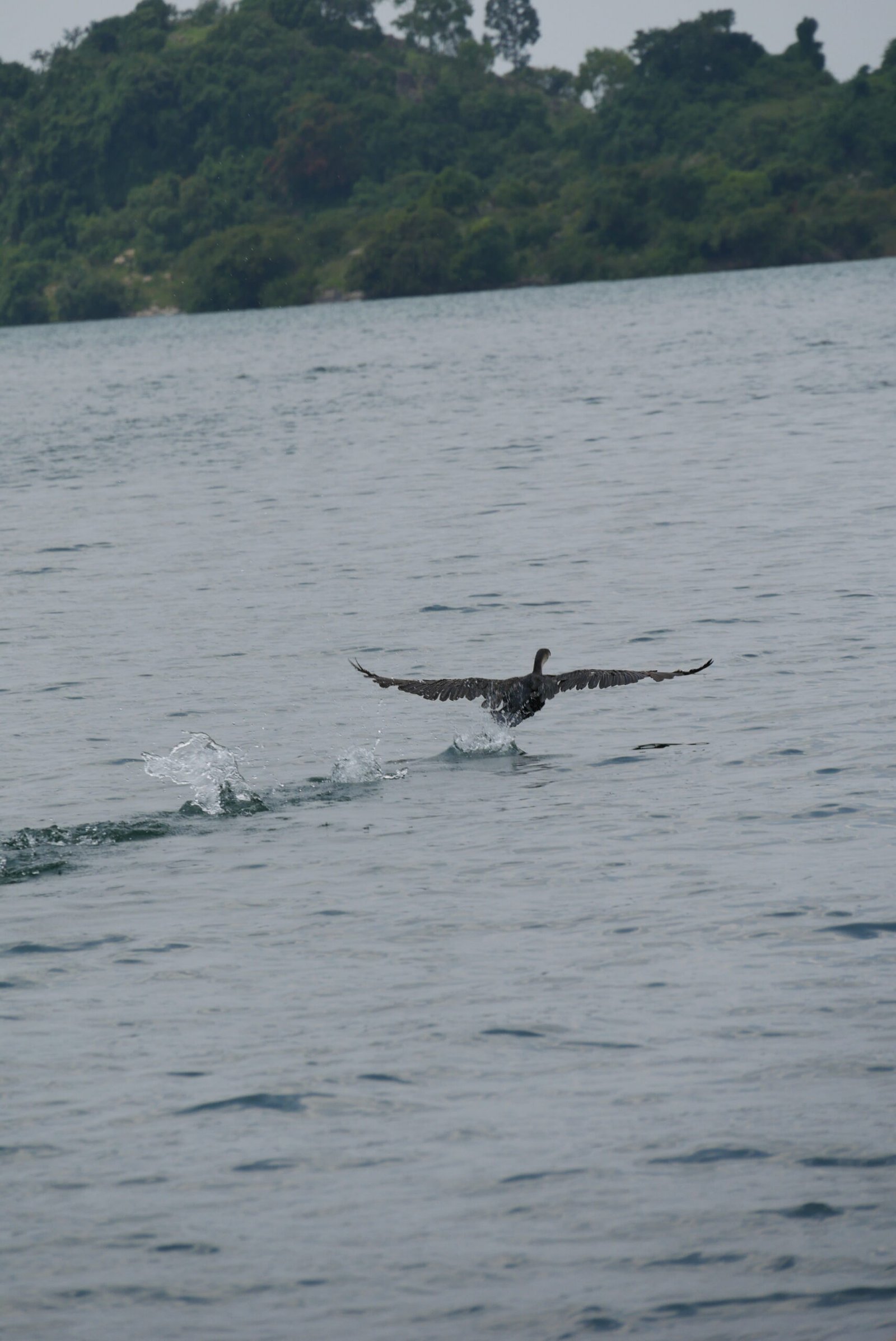
Lake Kivu, one of Africa’s Great Lakes, is not only a scenic wonder it’s also an important habitat for a variety of bird species. Among the most fascinating are the Cormorants, a group of aquatic birds well adapted to life on and under the water. Their presence around Lake Kivu tells a deeper story about survival, adaptation, and family life in the bird world.
Exceptional Divers and Fish Hunters
Cormorants are piscivorous birds meaning they feed mainly on fish. With their webbed feet and streamlined bodies, they are highly skilled divers, able to swim underwater using powerful leg movements to chase and catch fish like Sambaza, a small pelagic fish abundant in Lake Kivu. Unlike many other waterbirds, cormorants lack waterproof feathers, which allows them to dive deeper with less buoyancy.
Wing-Drying Behavior
One of the most recognizable behaviors of cormorants is their wing-spreading posture. After hunting, they perch with their wings fully extended. This behavior helps to air-dry their feathers, since their plumage absorbs water during dives. This is not just for drying, but also to regulate body temperature and maintain flight readiness.
Social Behavior and Vocalizations
Though generally silent, cormorants produce low-frequency vocalizations such as croaks or grunts especially during territorial disputes or breeding interactions. These sounds play a role in maintaining space within colonies and in communication between mates.
Colonial Nesting and Mating Rituals
Cormorants are colonial nesters, meaning they breed in large groups known as colonies, which can range from a few dozen to thousands of individuals. During the breeding season, males perform courtship displays, including wing-flapping, bowing, and offering nesting materials like sticks and reeds. These displays help attract a mate and establish pair bonds.
Once paired, cormorants are usually seasonally monogamous, meaning they stay with the same partner for the duration of the breeding season.
Nesting and Incubation
The mated pair works together to construct a nest, often built on trees, rocky ledges, or even man-made structures. The nest is made from twigs, grasses, and other local vegetation, forming a sturdy base for the eggs.
Both male and female share incubation duties, which usually last between 28 to 31 days. This cooperative parenting is key to the survival of their chicks.
Chick Rearing and Fledging
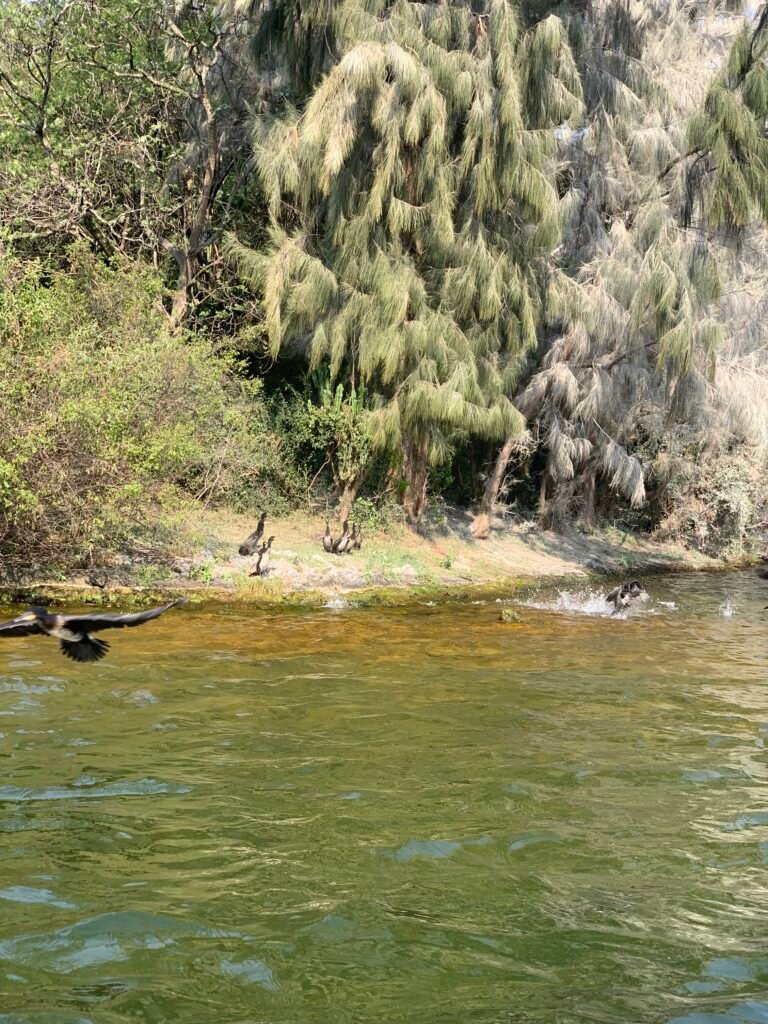
When the chicks hatch, they are altricial born blind, featherless, and entirely dependent on their parents. As they grow, they develop a downy coat, followed by feathers that prepare them for flight. Parents continue to regurgitate fish to feed their young until they are strong enough to forage on their own.
By around 5 to 8 weeks, young cormorants begin to fledge taking their first flights though they may still rely on their parents for food for some time.
Why Lake Kivu is Ideal for Cormorants
Lake Kivu’s rich fish population, especially Sambaza, offers an abundant food source that supports large colonies of cormorants. The lake’s islands, forested shorelines, and rocky outcrops provide ideal nesting and roosting sites. The clean, deep waters allow for successful foraging, and the relative safety of the lake environment allows chicks to grow and thrive.
In Conclusion
Cormorants are more than just birds by the lake they are a vital part of Lake Kivu’s ecosystem. Their fascinating behaviors from deep diving and wing-drying to complex courtship and cooperative parenting make them a species worth watching and protecting.
So, when you’re next by Lake Kivu, take a moment to look out for these black-feathered divers. You might catch a glimpse of one plunging beneath the surface, drying its wings in the sun, or feeding its chicks a reminder of the rich, living world that surrounds us.