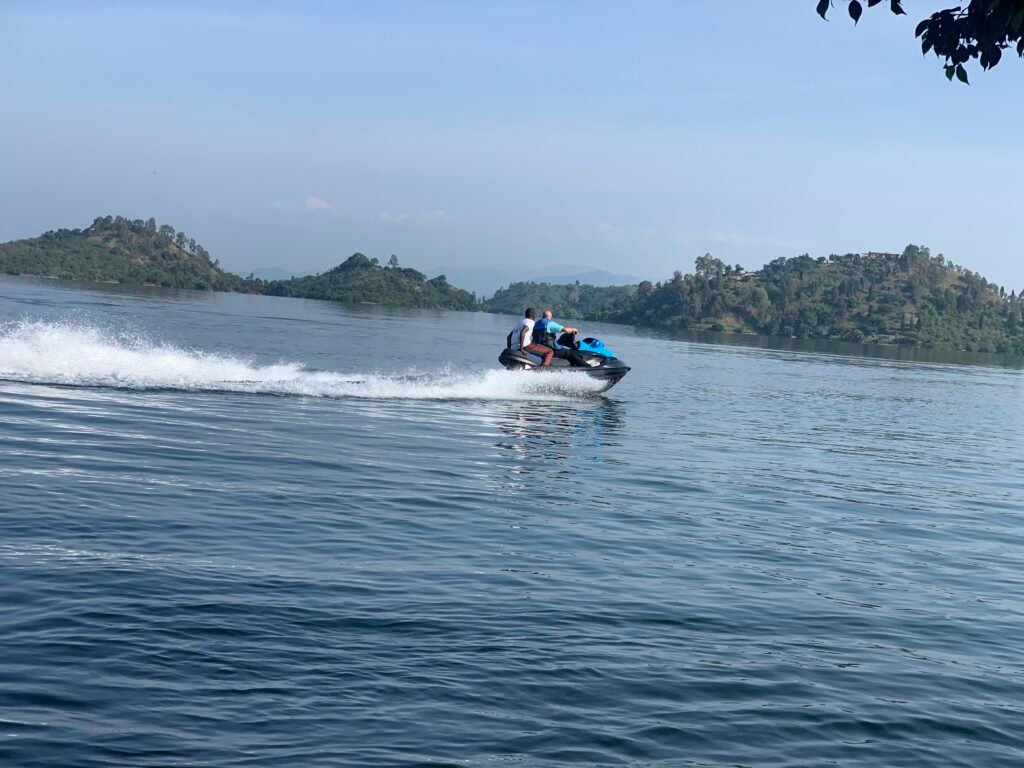
Lake Kivu is one of the most unique lakes in Africa and in the world. It is shared by Rwanda and the Democratic Republic of Congo and lies in the East African Rift Valley. The lake has a total surface area of about 2,700 square kilometers and reaches a maximum depth of about 480 meters, making it one of the deepest lakes in Africa.
What makes Lake Kivu special is that it is a meromictic lake, meaning its water layers do not fully mix.
Lake Kivu Water Layers Explained
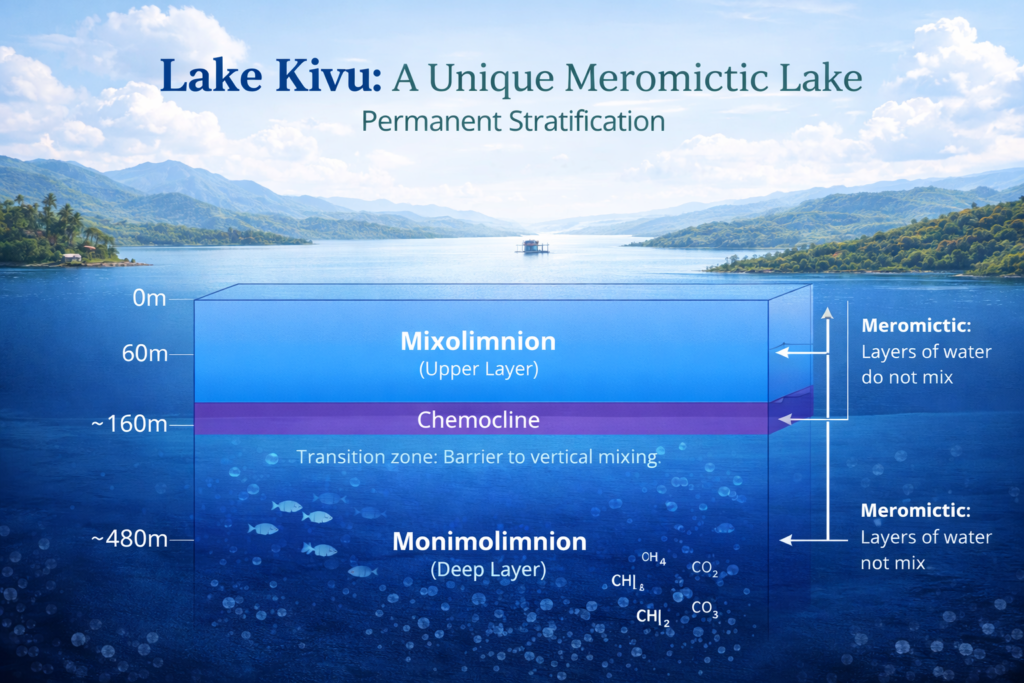
Lake Kivu is permanently stratified into three main water layers. Each layer plays an important role in the lake’s stability.
Upper Layer – Mixolimnion (0 to 60 meters)
This is the surface water of the lake.
• Contains oxygen
• Supports fish and aquatic life
• Mixed by wind and temperature changes
• Used for boating, fishing, swimming, and tourism
All daily lake activities happen in this layer.
Middle Layer – Chemocline (60 to 160 meters)
This is the between level of Lake Kivu.
• Located between 60 meters and 160 meters
• Strong change in water chemistry
• Acts as a natural barrier
• Prevents mixing between surface and deep water
• Maintains the lake’s long-term stability
This layer is the key reason Lake Kivu remains meromictic.
Deep Layer – Monimolimnion (Below 160 meters to 480 meters)
This is the deep, permanent water layer.
• Contains no oxygen
• Very stable and undisturbed
• Rich in dissolved gases:
• Methane (CH₄)
• Carbon dioxide (CO₂)
• Gases remain trapped under pressure
This deep layer makes Lake Kivu scientifically rare.
Why Lake Kivu’s Meromictic Nature Matters
Because deep water does not mix with surface water:
• Gas remains safely trapped at depth
• Methane is extracted in a controlled way to produce electricity
• Large marine operations require strict safety measures
• Environmental protection is very important
Lake Kivu is one of the few lakes in the world where methane gas is used for energy production.
Fish Species in Lake Kivu
Fish live only in the oxygen-rich upper layer.
Important species include:
• Isambaza (Limnothrissa miodon), the most important commercial fish
• Tilapia species, common in shallow waters
• African catfish (Clarias species), strong and adaptable
• Cichlids, important for biodiversity and ecosystem balance
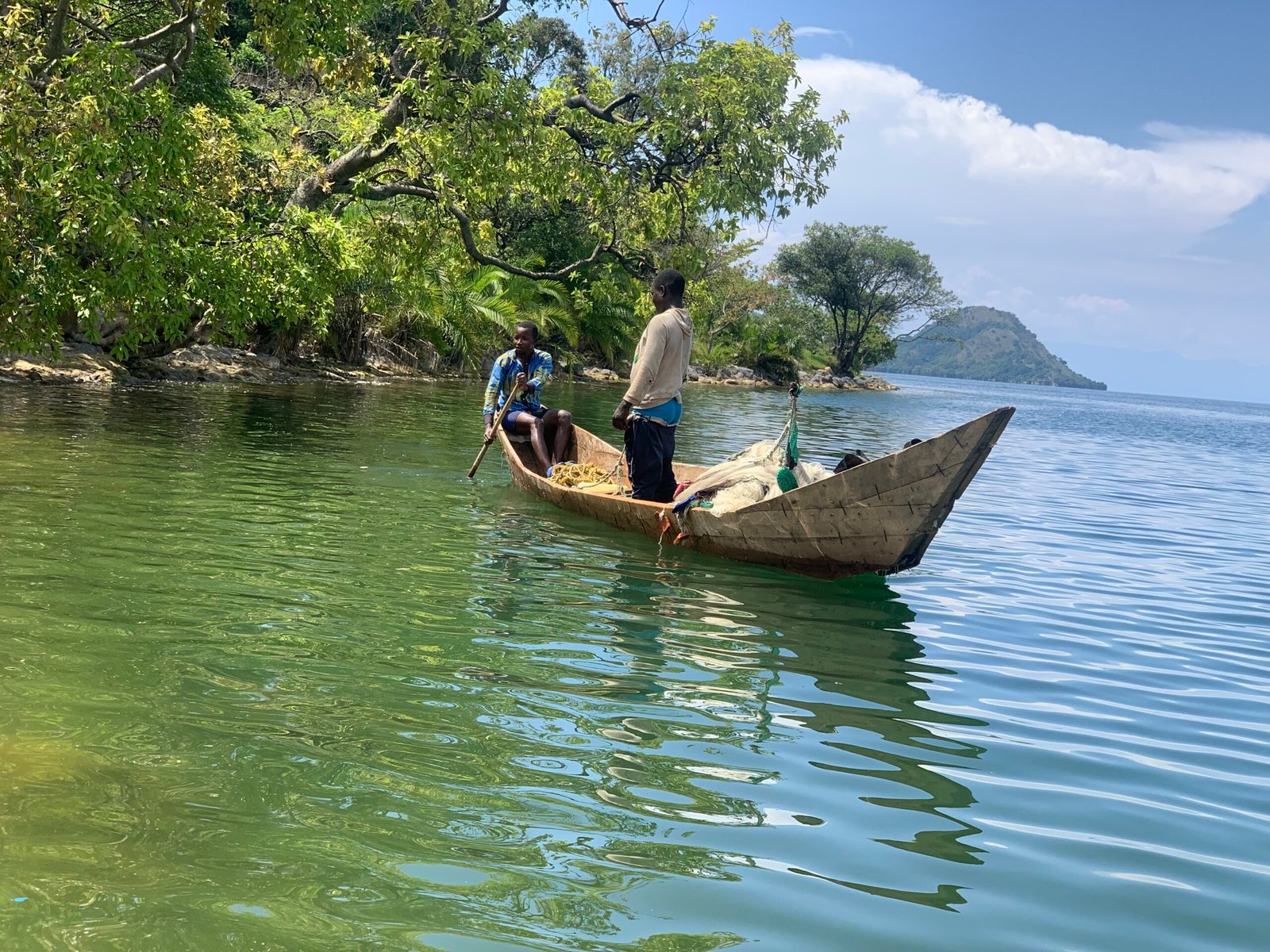
Fishing supports local communities and food security around the lake.
Lake Kivu: Natural Beauty and Global Importance
Lake Kivu is more than a lake. It is a natural wonder, an energy resource, and a source of life for surrounding communities. Its surface area, great depth, permanent water layers, and unique gas system make it one of the most important lakes in Africa.
Protecting Lake Kivu through responsible boating, sustainable fishing, and environmental care is essential for the future.