
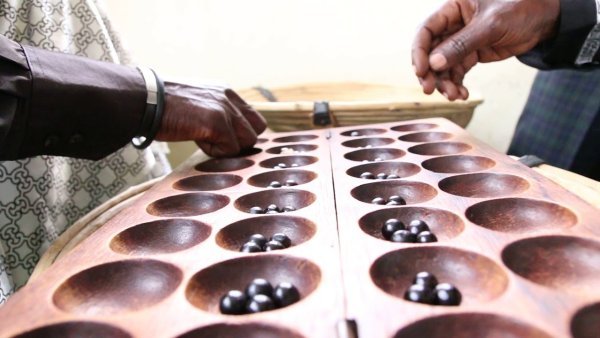
Rwanda is often celebrated for Mountain Gorillas, beautiful landscapes, and breathtaking scenery. But beyond the wildlife and rolling hills, Rwanda also holds a rich cultural heritage shaped by generations of storytelling, music, community traditions, and intellectual games.
One of the country’s most fascinating cultural treasures is Igiroro, the traditional board used to play Kubuguza, an ancient Rwandan strategy game respected for its deep intelligence and tactical thinking.
For centuries, Rwandans gathered around the Igisoro board not simply to play, but to learn patience, sharpen the mind, practice observation, and strengthen social connection. Long before modern strategy games existed, Kubuguza already trained memory, calculation, discipline, and concentration through carefully planned movement and strategy.
Today, Igisoro remains one of Rwanda’s most respected traditional games and an important symbol of African intellectual heritage.
ALSO READ; Intore Dance in Rwanda: Discover the Heart of Rwandan Culture
What Is Igisoro?
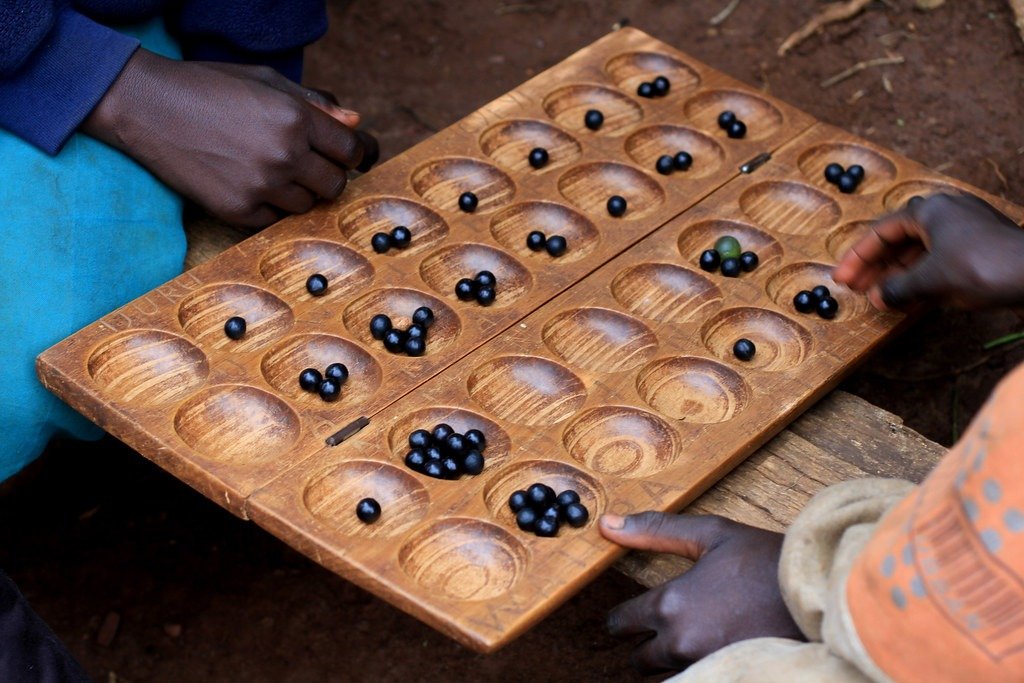
Igisoro is the traditional wooden board used to play Kubuguza. The board contains 32 pits arranged in four rows, with 8 pits in each row. Two players face each other across the board, and each player controls two rows on their side, a front row and a back row.
The game uses small seeds or stones traditionally called:
- Inka (“cows”)
In traditional Rwandan culture, cows represented wealth, respect, and value in society, which is why the seeds used in the game carry this symbolic name.
At the beginning of the game, the pits are filled with Inka following traditional playing rules. Players then move the Inka strategically around the board while trying to capture the opponent’s seeds, control movement, and create tactical advantages.
Because each Umubugu manages two rows at the same time, Kubuguza requires:
- Patience
- Concentration
- Tactical thinking
- Observation
- Strategic planning
This complexity is what makes Igisoro one of Africa’s most sophisticated traditional strategy games.
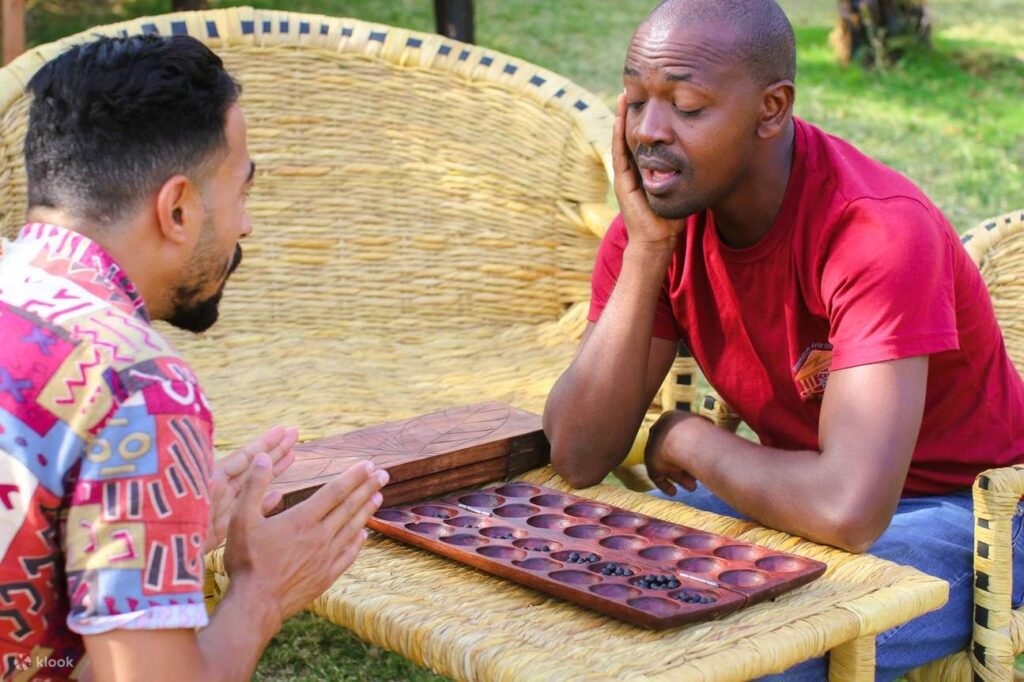
Understanding Kubuguza and Traditional Terms
Traditional Igisoro terminology carries deep meaning in Rwandan culture.
Important Terms in Kubuguza
- Igisoro → the board
- Kubuguza → the act of playing
- Ababugu → players
- Inka → the seeds used during the game
The changing normal direction of movement is called
- Nteba → happens at the one front pit
- Ngarama → happen at the the back pits
These positions are extremely important because they allow players to reverse movement direction through:
- Kugarama
An experienced Umubugu uses Nteba and Ngarama to:
- Escape traps
- Launch surprise attacks
- Extend movement combinations
- Control the rhythm of the game
- Build tactical advantages
Traditional players often say:
“Uwamenye guteba aba azi kubuguza.”
Meaning:
“Whoever understands movement understands Kubuguza.”
The proverb teaches that true mastery comes from patience, timing, and strategic understanding rather than speed or luck.
More Than a Traditional Game
For generations, Kubuguza was much more than entertainment in Rwanda.
It was:
- A social gathering
- A cultural classroom
- A mental exercise
- A symbol of intelligence
- A training ground for patience and discipline
Experienced Ababugu were admired for:
- Calm thinking
- Tactical intelligence
- Emotional control
- Deep concentration
In many communities, younger generations learned simply by watching elders play for hours, slowly understanding rhythm, movement, and strategy through observation.
Cultural Experiences in Rwanda beyond Wildlife
Travelers visiting Rwanda today are increasingly searching for authentic cultural experiences beyond safaris and national parks.
Experiences like Igisoro allow visitors to connect with local communities and understand Rwanda through its traditions, stories, and everyday life.
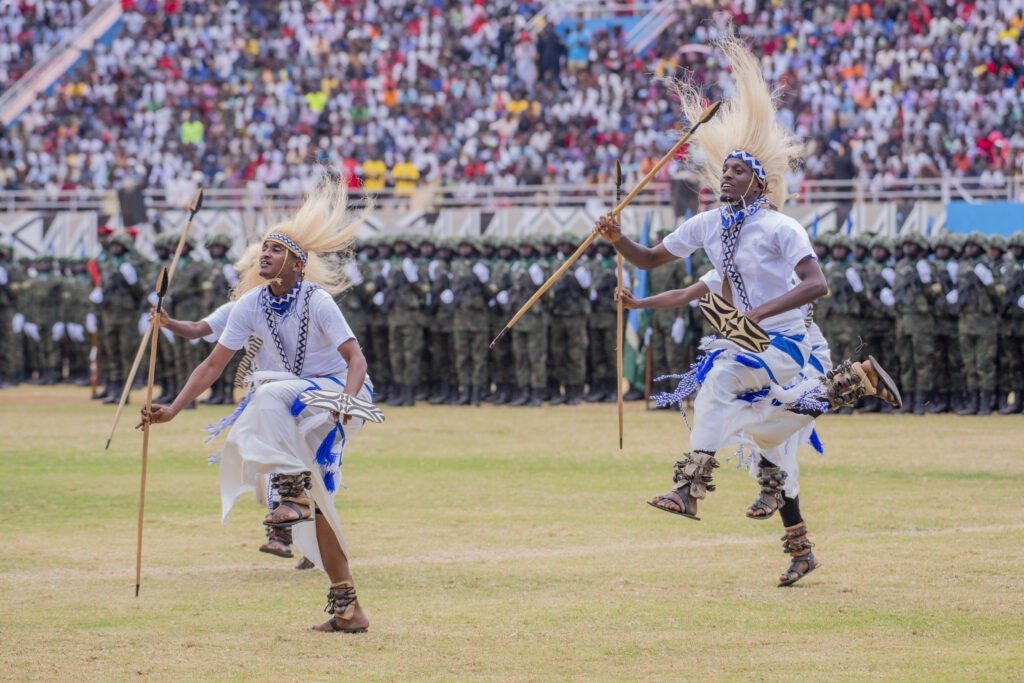
Across Rwanda and around Lake Kivu, visitors can also experience:
- Intore traditional dance performances
- Traditional drumming and music
- Community storytelling
- Coffee farm tours
- Basket weaving workshops
- Traditional banana beer experiences
- Village walks
- Traditional night fishing experiences
These cultural activities offer travelers a deeper and more meaningful connection with Rwanda and its people.
ALSO READ; Best Community-Based Activities on Lake Kivu, don’t miss
Why Igisoro Still Matters Today
In today’s digital world, Igisoro continues to remind people of Rwanda’s long tradition of wisdom, strategy, and intellectual thinking.
Long before digital games existed, Kubuguza already taught:
- Logic
- Mathematics
- Observation
- Memory
- Tactical planning
- Patience
Every movement across the Igisoro board carries generations of culture, history, and knowledge.
For many Rwandans, Kubuguza is not simply a game, it is a reflection of how to think carefully, remain patient, and approach life with wisdom and strategy.
Rwanda’s beauty is not only found in its landscapes and wildlife, but also in its traditions, culture, and community life.
From the ancient strategy of Kubuguza to the rhythm of Intore dance and the peaceful communities around Lake Kivu, cultural experiences in Rwanda offer travelers unforgettable moments of learning, connection, and discovery.
For visitors looking to experience the true spirit of Rwanda, Igisoro remains one of the country’s most fascinating windows into its wisdom, history, and cultural identity.